
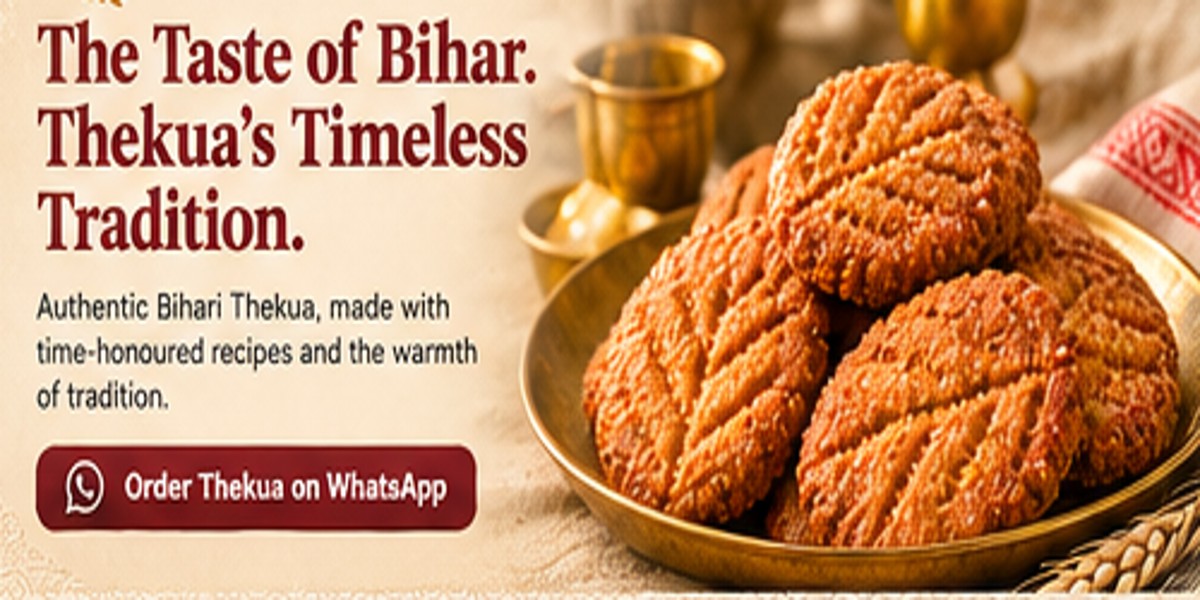
Every family seems to have its own way of making Thekua. Some recipes are passed down in handwritten notes; others are taught by watching and helping in the kitchen.
Common ingredients
Traditional home-style recipes commonly use wheat flour and a sweetener such as jaggery or sugar. Depending on family preference, the dough may also include ghee, grated coconut, fennel seeds, cardamom or other flavourings. The quantities and ingredients are not universal.
Preparing the dough
The sweetener is prepared according to the recipe, then combined with the flour and other ingredients to form a firm dough. The dough should be workable enough to shape without becoming overly sticky. Household techniques differ, and some cooks allow the dough to rest before shaping.
Shaping
Small portions are shaped by hand or pressed into a carved wooden mould. The mould creates the familiar decorative imprint. If a mould is not available, a simple hand-shaped piece is also part of many home traditions.
Frying and cooling
The shaped pieces are fried until cooked through and golden-brown, then cooled before storing. Frying temperature and time depend on thickness, dough composition and the cooking method. Follow a tested recipe and safe food-handling practices when preparing food at home.
A recipe is also a family memory
There is no single recipe that represents every Bihari household. Sweetness, texture, shape and flavour can differ. The most meaningful part is often the knowledge passed between generations and the joy of sharing the finished Thekua.