
Rooted in Bihar.
Carried through generations.
Our name celebrates parampara: the traditions, tastes and memories that connect us.
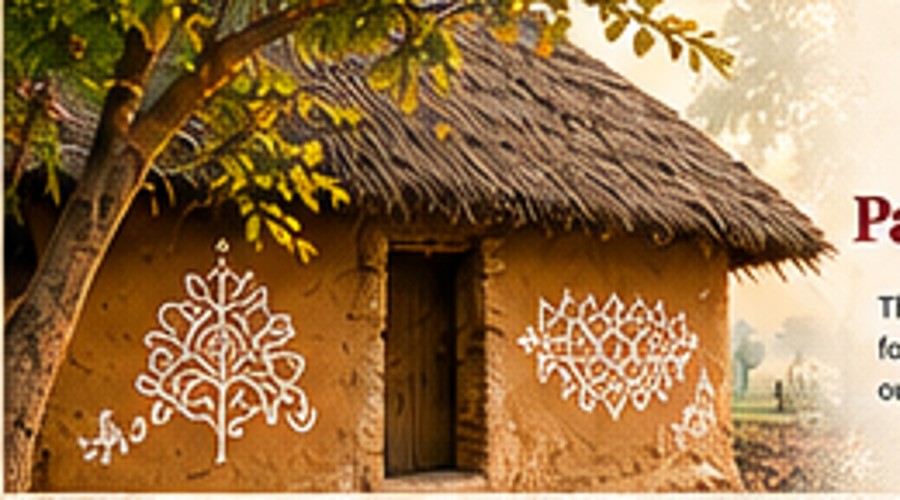
Why Thekua Parampara?
Some foods are remembered not only for their taste, but for the moments around them: a family gathering, a festive kitchen, a familiar recipe and the hands that teach it.
“Parampara” means a tradition carried forward. We chose this name because Thekua belongs to a living food culture — one prepared, shared and remembered in homes across Bihar and beyond.
Thekua Parampara is built around one product and one purpose: to celebrate the heritage of Bihari Thekua.
Why is Thekua the way it is?
The shape, colour and pattern of Thekua are part of its familiar identity.
The imprint tells a story
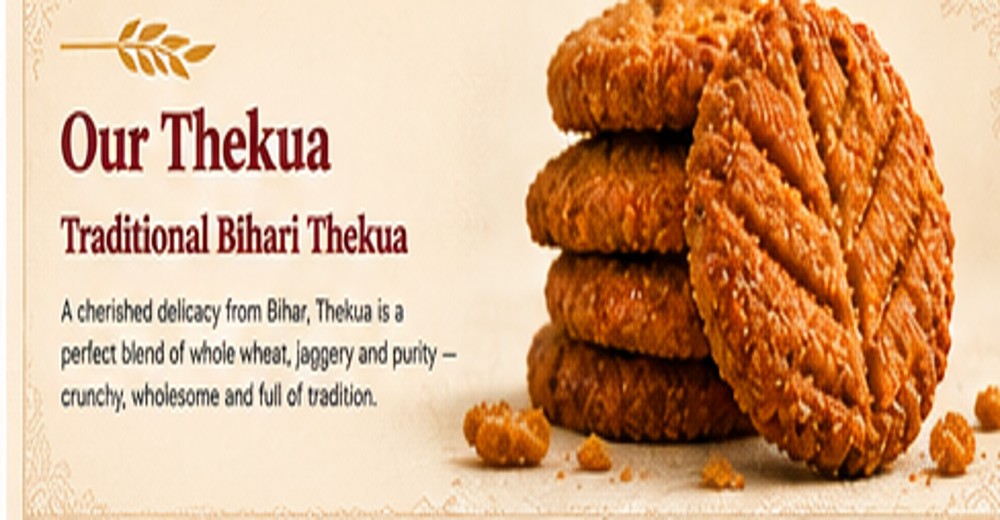
Traditionally, dough may be pressed into a carved wooden mould or shaped by hand. The mould leaves a decorative pattern on the surface. Designs vary between households and regions, and some families use moulds passed down through generations.
Texture, shape and slow frying
Thekua is commonly made with wheat flour and a sweetener such as jaggery or sugar, with recipes differing from home to home. Its golden-brown colour develops during frying. The patterned surface is a visual hallmark, not one fixed design.
Why the familiar ingredients?
Wheat flour gives structure, sweetener lends flavour, and additions such as ghee, coconut, fennel or cardamom may appear depending on the family recipe. There is no single recipe followed by every household.
These are common traditions, not claims about the exact ingredients or preparation method used in every batch of Thekua Parampara.
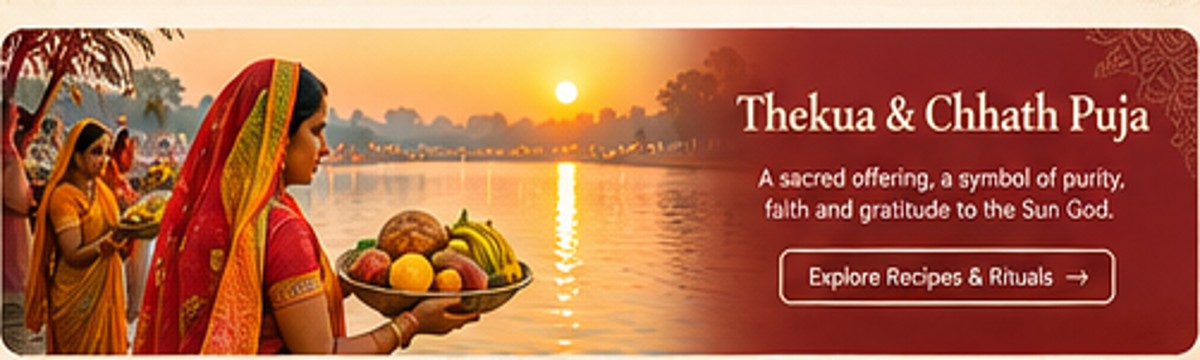
Thekua, Chhath and togetherness.
In many Bihari households, Thekua is prepared as prasad for Chhath Puja. Preparation can bring family members together, with recipes and routines shaped by family and community customs.
Read about the rituals →