
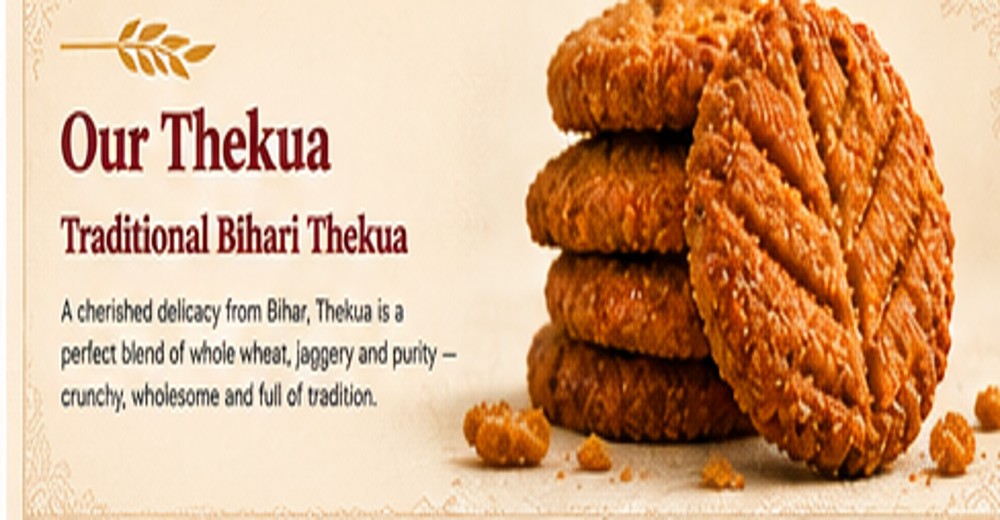
Thekua is instantly recognisable to many people by its golden-brown colour and decorative surface. Those patterns are not just pretty details: they are part of a long-standing home-kitchen tradition.
Wooden moulds and hand-shaped designs
In many households, portions of dough are pressed into carved wooden moulds. The mould transfers a pattern to the surface, creating ridges, lines or floral motifs. Other families shape Thekua by hand or use different tools. There is no single design that every family must follow.
Does the pattern change the texture?
The patterned surface creates a distinctive appearance and may affect how the dough cooks at the surface. The thickness and shape of each piece also influence its final texture. Family recipes and frying techniques vary, so Thekua can be crisp, firm or slightly softer depending on the method.
Why is it usually golden-brown?
The colour develops during frying. The ingredients, sweetener, dough moisture, thickness and frying temperature all influence the final shade. Jaggery-based and sugar-based versions may look different. The aim in a traditional preparation is to cook the piece through while developing its characteristic colour and texture.
A pattern that carries memory
For some families, a wooden mould is used year after year and becomes part of the household's festival preparations. The marks it leaves can evoke memories of parents, grandparents and relatives who taught the recipe. That is one reason Thekua's shape feels so familiar and meaningful.
Different families have different recipes and tools. The variety is part of the tradition, not a departure from it.